New Year, Old Me

Featured

I haven’t written here in a long time. There is a reason for this, I suppose. Most of what I have written here has been about me trying to find the footholds that keep me from slipping off the rocky path to understanding myself and the world around me. And now, this world around is becoming so unbelievably unkind with each passing day that it seems almost perverse to try and understand it, it has become unintelligible, sentences roughly picked up off a page and mangled between palms dipped in avarice, turning letters into mutilated insects. A lot has been happening in the past two years. People are suffering on the stage of a world that refuses to stop its greed from fuelling their misery. A battle is being waged in many pained lands, painted with the black and white of nationalism and religion, with those suffering infamously smeared with the black. Governments and companies are funding a genocide and offering up justifications written in blood for killing and starving children. My own country has turned into a war cry of hate where the truth is jailed without trial—sometimes also murdered—and history is being chopped up into rough-edged chunks that are then pieced together with the saffron glue of misinformation. 

The reality of pain has permeated all that exists in this world—from what I eat to what I wear—it swaddles the spine of those who care to pay heed to it, carrying the truth of incomprehensible cruelty in a rucksack on its back. We are sabotaging ourselves with a violent and apocalyptic fervour—clogging our rivers with the evidence of a wasteful existence, weighing down our air with unheard poisons, breaking apart our mountains for the devil named progress—led by misguided messiahs peddling pain to those who cannot afford their next meal. Can I count myself as a good person in a world where every structure, every institution, every power is instated through exploitation? The acknowledgement and recognition of one’s privilege is an acknowledgement that one benefits from the very structures they condemn. Any life of comfort one leads in this world of inequality must be an existence of guilt, an unease that sits on the back of your neck like the itch of an uncut tag from a new sweater. This guilt, the ability to witness as a whole people is displaced from their homes, and killed, fixates me. The act of witnessing induces a shameful immobilisation, reminding me of Niobe turned into stone by Zeus on Mount Sipylus, tears flowing from her stony lids, a despairing waterfall of guilt. Niobe was cursed perpetually into a crying stone, a reinforcement of god’s will, watching her fateful actions play out forever on the rigid stone of her body, but we, as onlookers, have the contemptible privilege of looking away, of disconnecting, of disengaging. As it turns out, then, both the guilt of partaking in the structures that perpetuate the violence one condemns, and the guilt of wanting to look away, renders one useless, stoned in by the myriad of things one can’t do to help, and unable to think of the things one can. 

This deplorable state of being is the one I have found myself in since last year. A state of an inexcusable impotence of the heart. I am a plant rotting at its roots, inches away from spreading the contagion of ruin. I have embraced a solipsistic dissociation, a dissociation that gets evermore polished with each passing year, carrying itself forward with only a changed number and no new me. The world and its offerings have turned into a concrete grey appendage I cannot see the life of. I observe and log, but I stop short of going beyond the title of interest. I label the feeling, but I don’t feel it, a book with no words to fill its belly, only the covers that seal it together. It is as if I am one of those false bottomed cups, ones that seem as if they can gather so much within themselves, but when poured into, they show their true depth.

In the new year, I do not want a new self, I want to resurrect my old one. I want to retrieve the self that could take in others’ pain and instead of getting turned to stone, would do whatever little was in her power to reduce it. I want to fix this inaction of the soul, its fortification against the world that it scorns to experience. I need to breathe life into the gangrened muscle of my heart. I want, in the new year, to feel. I want to feel it all. The joy, the rage, the nostalgia, the despair, the kindness, the helplessness, and all the other emotions life moulds within itself. I want to let the joy wash over me and let the anger ensure that the joy is coming from a place that does not steal it away from others who deserve it. I want to let my guilt and unease be a leash that keeps me from running wild in the jungle of this world, and instead, walk barefoot on the earth, feeling its every ache and joy in my nerves. I don’t know whether I am a good person, the very act of gauging the goodness of my actions or my person seems like an absurd exercise given the context of our existence. There is a lot to fight for and a lot to fight against, and I do not want to be a rotten plant in a world that, more than ever, needs green leaves to shine against the blue sky. 

On Forgetting

Featured

It has been a little more than a month since I finished my Bachelors and I don’t think that that fact has registered in my brain yet. It seems like it is still some cold, obscure idea, not a past occurrence I have lived through, as if it were the picture of an old neighbour whose house I would walk on my knees to as a baby, but now the only proof of them having been a part of my life are the facts of their existence presented to me by my parents. The last month of my degree feels like the tiny beads of kaali mirch my mom makes me place under my tongue when I have a cough, their wrinkly cover and slight spiciness sitting uneasily in my mouth, threatening to burst and burn it if hampered with. No matter how much I want to, my heart finds itself incapable of dwelling on how it got here, awaiting the start of a new degree at a new college, having to leave behind all that felt like home for the past couple of years. Like Eliot’s Prufrock, I, too, have measured my life out in coffee spoons, regimenting my time and thoughts, preventing me from securing the flotsam of memories drifting untethered in my head.

A lot is changing. After almost three years, I am leaving behind a place that showed me colours of life I had never imagined I would see. It has given me people whose memories will always carry with themselves the hurt and longing that comes with not having them close. It gave me two of my closest friends, friends who opened up their teetering home to me when I was faltering badly with being an adult. It wasn’t as if they had it all figured out, but that was the beauty of it, the mayhem of being a grown up quietened on those evenings when we were together, studying, talking or making dinner, with our cat, Dobby, smelling everything in his reach and us bickering over who will wash the dishes. It gave me the friend who loves One Direction and whose hugs soften the edge of the world for a few moments; the friend who took me to Manju ka Tilla for the first time and is now a permanent companion for all future visits; the friend who always asks me if I ate and brings me the lunches her Nani makes because the canteen food is too spicy; the friend who draws beautiful eyes on benches during boring lectures and tells me elaborate stories about how she ended up choosing the earrings she is wearing; the friend who gifted me polaroids with songs on my birthday and taught me that I need to stop being so quick to judge people; the friend who became my roommate of two years.

The most frequently visited website on my internet browser for the past few weeks has been the DMRC website answering my insistent queries about which metro line will take me to my friends who are now scattered across the city. Each new route I learn about becomes a pneumatic tube in my brain, carrying me from a place that I know of only from a couple of rushed visits, to people who have defined comfort for me for the past couple of years. As I bade good bye to these people, and as I left behind the flat where we marked Dobby’s height as he scratched our arms for waking him, all those half-imagined scenarios of teary goodbyes I had abandoned in thought became all too real and I came face-to-face with the intensity of the pain memories hide in their wombs. I am trying desperately to fight against rememberance because I do not want that which I already have to be overwritten by that which is about to come. I am hostile to memories because I can’t keep reliving them. It is almost as if I have imagined myself to be Orpheus, bringing his beloved Eurydice back from the underworld, and just as he was beseeched to not look back, I have assumed that looking back at my memories will destroy all that is good about them with the ache of the yearning they carry.

These memories of mine, so far, have not been able to combat change. Every good memory I make in the present takes me back to the one that I already have, as if the old memory were a rock I threw into the lake of the new one, causing ripples of nostalgia and longing reverberate through it. And since these ripples of the past hurt too much to remember, I forget, turning life into an eternal present concerned only with moving forward. I transform into a faulty locomotive with broken brakes, running too fast and forgetting all that I passed on the way. In some cases, I am grateful for that forgetfulness, letting the wraith of unwanted memories haunt a graveyard I hope never to visit. But, in the other cases, the pain comes because the good memories yearn to be remembered and this yearning carries with itself the reminder that I am not living in those good memories anymore, and in trying to shun the pain, the sweetness of the memory also gets blotted out. The sorrow of letting go eats up the joy that makes the past so hard to let go in the first place.

It is not easy to forget, but once you start doing it, every time seems to get a little easier, and before you know it, all you are left with is a destination as the only proof of your journey, which feels as hollow as it rings in the ear. The melancholy of missing might be heavy and lonely, but having nothing and no one to miss is heavier. Missing someone means you’re alive, it means you’ve lived enough to crave for your own life, for your own self as it used to be with the people you ache for. Orpheus may have looked back and lost his beloved forever, but, when I look back, I am making sure that I am keeping the people and the places that have made me who I am, who have made these memories I am trying so desperately to not let turn into the past, stay the way they are, away from the superimposition of the present. And as I make space for new beginnings, I don’t want where I have reached to be the only proof of what has passed, I want to look back as I move forward, I want to both create and remember.

This city

Featured

Delhi is a paradox. It is a patchwork of diversity, the threads holding together the patches coming loose and their edges blurring into each other. It is a place that teaches and it is a place that breaks. It is a place that shelters people who are sanctuaries and people who are as hollow as dying trees. It is a place that gives so much and a place that takes away the valuable.

We live in a past of our own making, a present uncontrollable, and a future insurmountable. In Delhi, these bleed into each other until the vagaries of the past weather the stone of the present and the future moans under the weight of inexactness. It is a place where the past, the present and the future hold hands in a circle at the centre of which I sit with folded knees. I struggle in this continuum, as unfathomable as the grey waves of the seas, trying to find a pocket of solace untarnished by the blood of time. I don’t understand this city. I don’t understand its bloodthirsty weather that loves to toy with extremes. I don’t understand people who carry rage in their screwed fists and flippancy in their curving lips. I don’t understand myself when I breathe its air, my heart mimicking the pounding pulse of this forever-awake city.

This city has taken the meaning of home away from me and turned it into an unrecognisable caricature of itself. I don’t know what home means anymore. When I went to Gujarat for Diwali last year, the fluttering excitement of going back home did not make itself evident. It was as if I was going back to a place I recognised only through the stories others told me of it, my own memories standing at a remove. It wasn’t until I landed in Gujarat that I could say that the unsettling lack of feeling had dissipated a little. It was like accidentally chewing on a clove that my mom puts in the tadka for dals. In the first few bites, you don’t even realise you have chewed on something other than dal and rice, but, as soon as the realisation hits, you wait in numbness for a few seconds, and the harsh flavour of the clove bursts on your tongue, leaving you gasping. Landing in Gujarat was the same. The flavour of the realisation that I was back home was so strong that my tongue burnt with the taste of it. With this realisation, however, also came the taste of fear. The fear that Delhi has the strength to overpower the bucolic existence of my past and my memories with its unflinching pace and crush them under its weight until I remember to do nothing but run in order to survive the race that is life in this city.

But, ultimately, it is Delhi that gives me a reprieve from its own cruelty. It is Delhi which gives the scars left by its own brutality an ointment to heal. Delhi has taught me what real friendship is, it has taught me how to love. It has given me people who hold within themselves the blue-green power to help me face what is broken, if not the power to fix it. They help me up when I fall and hold me up when I climb high. They don’t call me by my real name, they call me “Aashi”, the nickname my family calls me. I don’t remember when “Astha” turned to “Aashi” or when friendship turned into family. It was as if we were patients suffering the same ailment, put together in a single hospital room, the pangs of our pain yearning for a companion, none of us realising when we decided to find strength in each other, to hold hands and find shelter from the city in each other’s palms. I have found homes made of flesh and bones, the rhythm of their hearts beating life into me.

This city is a tug of war. It is a tug of war between the memories of the home I left behind, a home that doesn’t know me anymore, a home that I am a stranger to and the present of a home that is seeing me grow, a home that is seeing me stumble through life, a home made up of people who keep me closer to myself. Delhi may have made home take on a different meaning, but it was definitely not a bad one, and it took me some time to realise why I didn’t like this change in meaning. Bricks can stay, but people go away. Homes that have hearts seldom stay in one place. So, Delhi’s meaning of home will keep on changing and transforming itself with the hearts of the homes it houses, and home, for me, will keep on shifting shape and the tug of war between the past and the present will not end.

Not only has this city given me people I call home, but it has also given me my first taste of freedom. It has taught me to learn the meaning of myself as I stand unfettered under its polluted, oil-pastel sky, my skin painted the colour of my dreams. But, just like the truth behind my thoughts don’t provide me answers to the mystery of myself, freedom also comes at a cost. Freedom, in Delhi, becomes a responsibility capable of crushing me under the weight of unexplored possibilities.

It almost seems like every good thing about Delhi carries a consequence as if happiness is a snow-capped mountain I must carry out a back-breaking climb for, and once I reach the summit, the heights turn out to be too frightening to allow me to stay. This paradox of a city is what causes hurt, and it is also what protects me from it. It keeps me bewildered at the centre of it, a prisoner in its maze of traffic-choked roads and sky-high buildings. All I can do to survive is keep myself from getting lost in its clockwork of creating pain and taking it away, of giving me happiness and scaring me away from it.

On Finding

Featured

When I first thought about having to shift so far from home and my family for in-person college, I didn’t think of it in solid terms. The feeling manifested in my chest as an abstract ball of fear, homesickness, excitement, and thrill. These waves of emotions bled into each other until I could not distinguish one from the other. All I could decipher was the urge to move on and get away from everything that had become so familiar that its existence no longer registered as an entity separate from me. I wanted to come to Delhi and cut this abstraction out from my heart, give it dimensions, carve out its shape, and place it in the safe cage of measurement and quantification.

Home had seemed like an antique relic, valued for its permanence and familiarity but so bent and twisted by time that newer and shinier substitutes were bound to be sought. So, when I moved, the loss of the reliability of familiarity was more or less pushed back by the spirit of adventure that accompanies the unknown. I did not see moving as a challenge apart from the immediate logistical concerns. It was a change from the two years of pandemic-induced stillness, a change that brought with it movement, creation, and becoming. The past and nostalgia did not find a place in that dance of progress except in comparing what was and what is. So, when I hugged my mom and dad goodbye, I felt a sort of righteous pride over leaving home because it was the first time after the pandemic that I was the one doing something to alter my world and not having it done to me by things I had no control over.

My first night alone in Delhi was enough to expose my delusional naïveté to the ravages of reality. My roommate was due to arrive a day after I had shifted, so I had to spend two nights alone in the room of the Paying Guest service my parents had booked for me. Everything in that room was red. The desk, the cupboards and even the beds. A bright, oppressive red that my brain exaggerated to such an extent that after I switched the lights off, the redness of the furniture left dancing shadows behind my eyelids. As my head hit the pillow my Dad and I had bought in the afternoon before he left, the red darkness of that room swirled around in my head, digging up all the thoughts I had refused to think.

Back in Gujarat, my identity was shaped by the spatial and familial tethers of my home. I was the girl who couldn’t make plans with her friends because she lived so far. The girl woke up early in the morning and went cycling. The girl who read all day. The girl who wrote. The girl who knew that all that was being said about her was true but found it grossly inadequate. I found it so because I wanted to do so much more. Delhi was my first chance at that so much more. I was placed on the map of a city I knew nothing of, but more importantly, the map of the city knew nothing of me. I could create an identity not bound by the tethers of a place that had created one for me, brokering no space for negotiation. But, the problem with being bound was that once I got it, freedom seemed unnatural, like a gun in a child’s hand. Those tethers had left deep clefts in my skin, and as I lay in my narrow, red bed with my ankles sticking out from the end, I felt the absence of those bonds like a scab I could no longer ratchet because it had shed. Freedom, at that moment, presented all of its chiselled angles to me. I realised that just because I had freedom did not mean I was free. Being untethered also meant that I was completely responsible for myself. I was responsible for crossing roads safely, for waking up in the morning on time on my own, for soaking in almonds at night before going to sleep, for not cutting my finger on the loose nail in the balcony door, for eating healthy, for taking my meds. For the first time in my life, I was responsible for my own survival. Responsibility became a reality I had never faced before with such force.

Just as freedom and responsibility redefined themselves, I also had to refigure happiness to fit the contours of this new city. Happiness in Delhi means buying fruits without being overcharged. It means going to college on seven hours of sleep and filling breakfast. It means reading in the morning and also being able to clean up my apartment. It means being able to talk to new people. It means spending time with people I like. It means understanding myself a little more. It means not losing myself in the heady smoke of anonymity that clouds the city. My happiness had to be reshaped to fit the maze carved out of responsibility and survival.

When I was a kid, I had once fallen asleep with a piece of chewing gum in my mouth, and when I woke up and found it stuck in my teeth, I was terrified, thinking I had broken a tooth and it had turned to mush because I slept too much. It took me a few seconds to remember the moment when I had eaten the chewing gum and to believe that it indeed wasn’t a broken tooth turned to mush. In the beginning, being in Delhi was the same. Every morning I woke up in that room with the garish red furniture, it would take me a terrifying few seconds to recollect the moment I left home for Delhi and then slowly spiral back to that point on the map of the world.

I always thought to create an identity I liked, I would have to find myself. This was a grand proclamation I made without fully realising what it meant. What does it mean to find oneself? If I wanted to find myself, would I have to situate myself somewhere in this world? The moment I broke the tethers of familiarity, I floated off into an unfamiliar universe with nothing to hold on to, and I am yet to find my footing. While I do not regret breaking those tethers, it makes me wonder whether to be found, one should lose themselves to the place where they want to be found. And what if one is stuck in a limbo where the edges of their lives are so badly blurred that they cannot hold onto them? How do I find myself if I am stuck in limbo between not wanting to belong to a home I left and struggling to belong to a place I left home for?

Four-Dimensional

Featured

It has been almost four months since colleges reopened. The third dimension of life that the pandemic had so brutally smashed down has gracefully picked itself back up from the rubble and brought with it another dimension I had never experienced before–college life. College life has begun, it has finally begun, and its new beginnings have changed how I defined life in the pandemic-ridden world of the past two years. All the expectations I had fostered are finally manifesting themelves in the form of the red brick building of my college; in the form of my friends; in the form of hot, dusty physical classes; in the form of freedom.

My college is a 68 old year building that radiates a sense of broken intellect, the kind of intellect that is buried under years of bad administration and mismanagement but is always waiting to be found by those eager enough to do so. As soon as you enter through the gates leading to the college, the first thing you see is the silver letters spelling “Kirori Mal” at the top of the main building, with the huge silver ‘I’ of “Kirori Mal” hanging askew, ready to fall. Students joke that the “I” is falling for the “M”.

The first day of college frightened me. During the pandemic, life had shrunk into the walls of my house, and it rarely dared to venture outside. But, as soon as I stepped into college, I could feel that the wind that blows here is created by the fluttering wings of the dreams of all those who walk its corridors. I could feel that every minute in this place would be laden with possibilities of things I had only imagined until now. Every step I took that first day was laden with an overwhelming urge to flee. It was as if I was a caged animal who, after finally being set free, had no clue how to harbour that freedom. I remember my heart beating too hard with the thought of the sheer scope of all I could do with my life here. It takes a lot of time to reconcile with the enormity of the potential that college represents; I don’t think I have still succeeded.

Back in school, I had very little in common with my classmates; oddly, I had found solace in my singularity. But, at college, I discovered that I wasn’t alone. I discovered that every person here is unique and shaped by a story I haven’t read. So I sought solace in people who told me their stories with a kindness I hadn’t received from strangers before. I made friends. I realised that some people are genuinely interested in your story. So I slowly, hesitantly read it out to them. They listened to the past chapters and became a part of the new ones.

College life in a place far from home is built on the pillars of independence and freedom. This freedom is the kind of freedom that leaves you untethered in this vast world and brings with it a lot of responsibility. The responsibility is not just that of survival; it is of creating a home for myself in a strange, new place; it is the responsibility of being happy.

My first couple of months in Delhi were tough. I understood what homesickness meant. It’s such a heavy feeling, homesickness. It’s like you are carrying the weight of all that meant home to you inside your body. It’s as if the world you see in front of you squeezes out all its colours into the world your heart craves, and the one you live in goes colourless.

Fortunately, the relentless pace of college life soon took over. Lectures, college societies, libraries, cafes—there is so much to discover and so many discoveries to talk about. But, the homesickness always managed to sneak in through dark corners and gave the silence of the night a voice. So, when I finally did go home for some time, I expected the feeling to disappear. But, what really took its place was an intense yearning for the shade of the old trees at college, the department room with its brimming creativity, and the time I spent with my friends. As frustrating as it was, this is when I understood that the foundations of my new home had been laid in the liminal space between my homesickness and the longing for college and all that it entails. I also understood that the unfettered freedom and potential that college life stands for can be a very heavy weight if carried the wrong way. College life, I have realised, is like a roaring sea—it takes you in with its enormous waves, and once you are under the blue of the sea, you can either build your own Atlantis or drown.

The Green Line

Featured

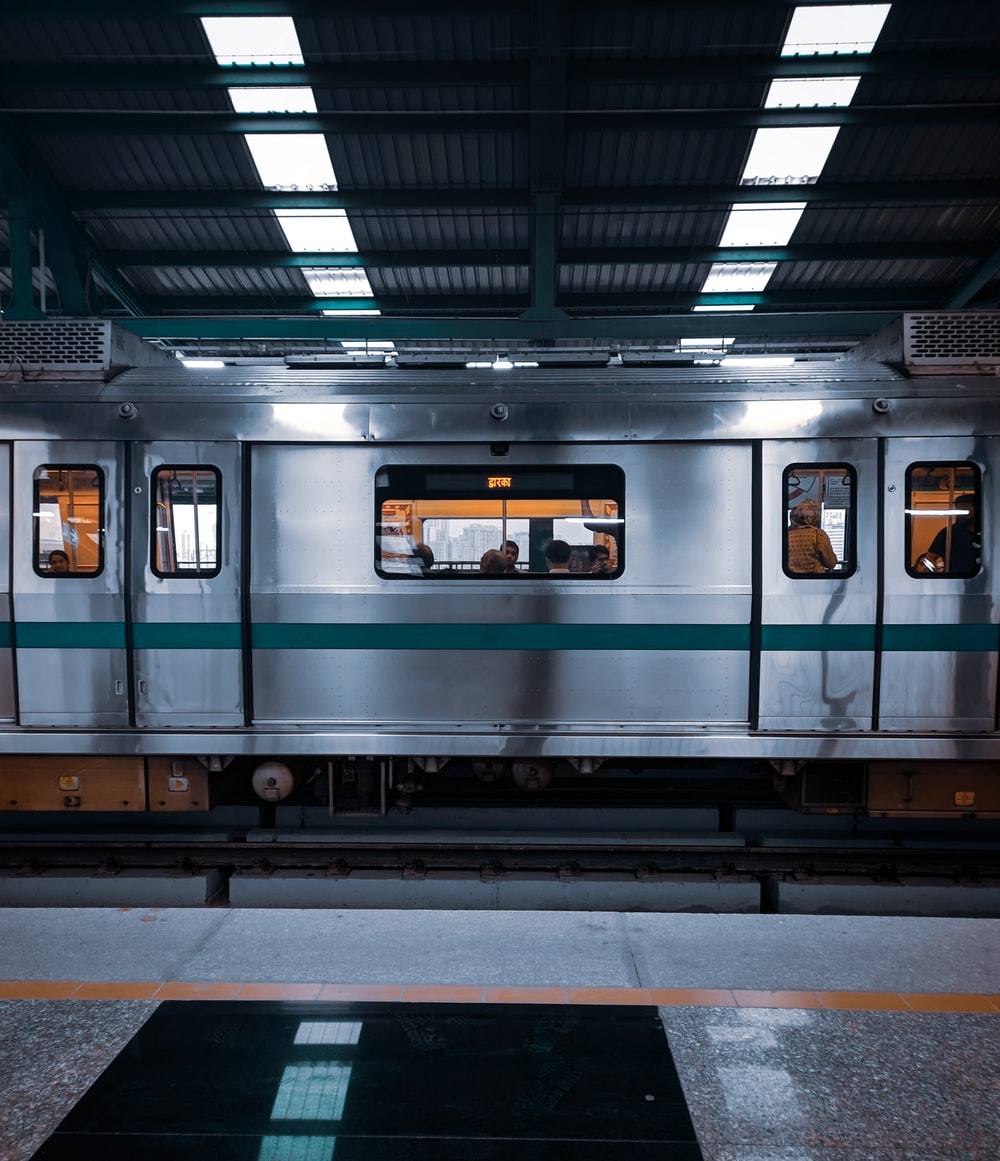
The Green Line of the Delhi metro is the slowest.
For the green line, each station is a
dear friend’s birthday and the journey to every
stop a stroll down the tracks of the time
it shared with them.
It’s almost as if it wants
you to let go of your destination and
fade into its thronging, metallic belly.

So, the world slows down from Inderlok to Peera Garhi.
The relentless pace of life Delhi has gifted me
with gives way for those 25 minutes, and
even though I see the world outside
the glass panes of the metro struggle to
catch up, it fails to outrun the zombies
of the cracked memories I had long since suffocated.
The silver surface of the train turns a
wild orange, mirroring the fires lighting up in
my brain as the women’s compartment becomes a
purgatory for the repentance of the sins I had
ignored the existence of.

Sometimes, the metro skids to a halt a few metres
before the station and declares that the stop
has been reached, as if trying to cheat the
passengers out of their destination
the way I had tried to deceive my brain
by showing it the corpses of the past.
And as the announcements declare how the metro
has reached yet another station that is not mine,
the rotting bodies pick themselves up and
shake out their putrefying limbs.
The stench of their decay
invades the cool, sterile air of the train,
it reaches my nose, clogging it,
making it hard to breathe.

On belonging

Featured

Creativity needs inspiration. Without the warmth of inspiration to melt it, creativity drapes itself with a dense winter fog that refuses to shed. Writing, if I may take the liberty of assuming that’s what I do, needs to have a catalyst with which to mould the clay of errant thoughts that would otherwise be lost in the graveyard of unspoken and unwritten reflections.

I was going through some of my writing, and I discovered that almost none of them had a location. They were all just smoky, fluid manifestations of my consciousness with no anchorage to a space on the map of this world. Most of my pieces did not mention a world outside of my house. In discovering this I realised how much I had internalised my dislike for the town I have been living in for almost 13 years now. I realised how detached my inspiration was from this patch of Earth I have spent most of my life in.

Writers often find a muse in the landscape of their city; they write poems, essays, entire books fuelled with their love for its history, its culture, its eccentricity. When I want to write, I shut all my windows and close all the drapes. I suspend myself in the space shuttle of my room, and my words and I float in its zero-gravity until I have gathered them all in my palms, and that is when, clutching them against my chest, I descend to Earth. My spatial existence is forgotten; in those hours of writing, I live only in time. When I create something, I try to rid myself of this town. I try to rid myself of it because I see nothing worth keeping. There is no beautiful garden with a favourite tree I can go and sit under, no public library that made me fall in love with books, or even a single bookstore for me to find solace in. There is no bench a famous writer once wrote a masterpiece on, no famous origin story, or any story at all. There are no fond memories of places in this town that mark the milestones of my life. This town just is; it exists, that is all it does. It is just another town in a multitude of them with no personality to call its own, as if it were mass-produced with a product description that read, “Town. Pre-fitted with roads, buildings, trees and dust.” The buyers added the DIY creations of cow poop and environmentally harmful garbage all on their own.
If historians were to examine this town’s ruins some hundred years later, they wouldn’t find the remains of a lost culture; in fact, they wouldn’t find anything that would tell them that this town was a town of its own. How scary it is never to stand out, to only exist and not live, to have been just another star in the vast expanse of the universe.

I think these feelings were exacerbated by the pandemic, like the already shattered mortar of a pothole that is not repaired and keeps on breaking with each passing vehicle until it is big enough to cause fatal accidents. The pandemic made me realise how little of my personality was shaped by this town, how all that I have learnt has been taught to me far away from this town. When people say they belong to a certain place, they mean that they carry within themselves a part of it. They mean that they have a place in the overwhelming vastness of this world to call their own; they mean that their is a place in this world where they can go back to, tired and needy, and be sure that they will be tended to, because they belong to, they belong in their town. Me? I simply don’t belong to this town. I don’t belong to its mundaneness; I don’t belong to its unimaginative creations; I don’t belong to its leaves; I don’t belong to the wood of its trees; I don’t belong to the wind of its breath.

Not belonging to the place I grew up in, not carrying a piece of it with myself makes me sad. I want to belong to it, I want to belong in it, I want it to inspire me, I want it to change; but thinking of this town gives me an inescapable urge to break free, to forget that I ever called this place home and see a world in which this town is just a ghost in my memory. My mom once said to me, “I think that our dislike for someone is often a manifestation of our own fear of becoming what we dislike.” Maybe that is what flows through the veins of my dislike for this town, projected fear.

Hope

Featured

A new year is about to begin. An old one is about to end. A new year is about to begin. An old one is about to end. A new year is about to begin. An old one is about to end.
Writing helps me process.
I am processing.
Covid’s surging again. Covid’s surging again. Covid’s surging again.
Stating facts helps me process, too.

We humans, we like to hope, we like to hope because uncertainty breeds fear breeds immobility. Immobility—the last two years tell us—means the candle of the world melting under our feet, the searing wax leaving us stuck. Stuck means we do move forward, in days, in hours, in minutes, but we are glued to the page of our lives that reads lockdowns, night curfews, social distancing. It means the world hanging on a clothesline, taking a break from being itself. Break means a sickness that spreads faster than its fear. It means all of life’s perfect colours are frozen into rigid, unreachable pixels. Sickness means the map of the world getting replaced by a single line made not of territory but death toll, no land being spared.

Nightmarish déjà vu is taking me back to the beginning of this year and the near middle of the year before that. No endings though, endings always bring hope because they mean beginnings.
And beginnings are better because they have the past to learn from. We will say goodbye to an unhappy year and hope that the next one will be better. Goodbyes are sad, but it’s different when you are trying to bid farewell to sadness itself.

Emily Dickinson said about hope, “Yet never in extremity/it asked a crumb of me”. Her hope must have been so delicate, so light, after all, it is a “thing with feathers.” But, our hope, it is a thing with oceans,
it is a thing with the sky, it is a thing with the sun, it is a thing with the moon, it is a thing that gives life to all those that live in it, it is the earth itself. And so it asks a lot of us, it asks us to protect ourselves and others, it asks us to stay at home and be with our family, it asks us to persevere a little longer, it asks us to hold on to it, tightly, and never let go.

A new year is about to begin. An old one is about to end. A new year is about to begin. An old one is about to end. A new year is about to begin. An old one is about to end.

I am still processing.

Two-dimensional

Featured

When I visualised college life before the sick weight of the pandemic bent and twisted everyone’s lives, I would think, this is what people must mean when they say “my heart jumped with joy in my chest.” I would think of the experiences I would have, the friends I would make, the places I would go, the teachers I would admire, and most importantly, the great unknown which comes with change. Before admissions began, I would see the photos of my dream college over the Internet and imagine myself sitting and reading in the lush gardens in the pictures, the feeling of grass between my toes and the dappling sunshine falling on my face under a big tree. These dreams were so real in my mind, I could almost touch them, but then the pandemic forced its way into our lives, and the whole world became untouchable.

College life, post-pandemic is, put simply…sad, very, very sad. The teachers I admire are walled behind a glinting screen; the things I learn from them are not said in a classroom where the walls and desks hide stories of past lives, but in a room I know nothing of, a thousand kilometres away. The teacher who is going to teach us Sophocles, is an elderly man who teaches us like we are his equals. It is an amazing feeling, being taught by someone who considers you their equal even though we probably don’t have 10 percent of the knowledge he does. Being taught as equals makes one feel deserving of the knowledge being sent your way. His voice sounds as if it is released from a vacuum, a sort of husky tone that seems a little other-worldly. He has an air of wisdom about him—the kind that is honed to the brink of perfection with age—with his crescent moon of wispy hair, a beard that stands like a bush across his neck and his half-rimmed glasses. But, it is not the kind of wisdom which is intimidating, it is the kind of wisdom that is restless in its excitement to be shared. He said he is going to retire next year, I just hope that video calls, WhatsApp messages and emails are not the only way I get to communicate with him.

In lieu of introductory sessions with teachers we had separate WhatsApp chats created for every subject because the pandemic has delayed the session and there’s no time for introductions now. Everyone introduced themselves in a chat message. How could a chat message on a flat screen in my hand replace the experience of feeling the nervous energy of a classroom full of strangers trying to fit their personality into a few sentences for each other’s convenience? It was like my life had turned into a two dimensional space, the third dimension deconstructed by the pandemic. All of the friends I thought I would make are no more than names in endless group chats I never bother to read. How can I become friends with someone I know only from words, not from their laughter, not from their idiosyncrasies, not even from their voice?

I hear my fellow students say stuff like, “I am glad to be a part of this college”, and I wonder if I am the only one who doesn’t feel like a part of anything. I wonder, how do these people have the capacity to love something they know of only from a screen? I wonder, how do I feel like a part of the college when I don’t even know what it looks like from the inside, when I haven’t felt it’s body at my fingertips; I don’t know what places near it are worth visiting, I don’t know I don’t know what places have the best food. I know my college only in its very bare bones: the internal organs, the muscles, the nerves, they are all strangers to me. I didn’t really make the effort to know them, because I didn’t want it to be another two dimensional hope poking at my brain.

College was supposed to be a new chapter of my life, but right now it seems like my life hasn’t even bothered to start a new sentence. The college experiences that are supposed to change the course of the rest of my life are currently leading a metaphysical existence in the great unknown of a change that hasn’t occurred yet. I didn’t think I would ever say this, but I’m ready for the great unknown, I am ready for change. I desperately want my college to reopen. I want life to be three dimensional again.

Beyond Reason

Featured

Are days and nights
sun and moon’s compromise?
Do clouds ever want to
jump down from the sky?
Who eavesdrops on whispered
secrets more? A sunny day
or a starry night?
Does the land beneath our feet
ever feel stifled with our footprints?

Why can’t we shed our worries
as easily as tears?
When did prejudice smother
humanity?
Why does growing up make me
feel so small?
Do happiness and sadness have
a schedule to follow?

Why does everything become
just so much better with colours?
Why can’t we sometimes
just let the inexplicable
remain unexplained?
Does there exist a safe
somewhere, that stashes
all the mysteries of the universe?